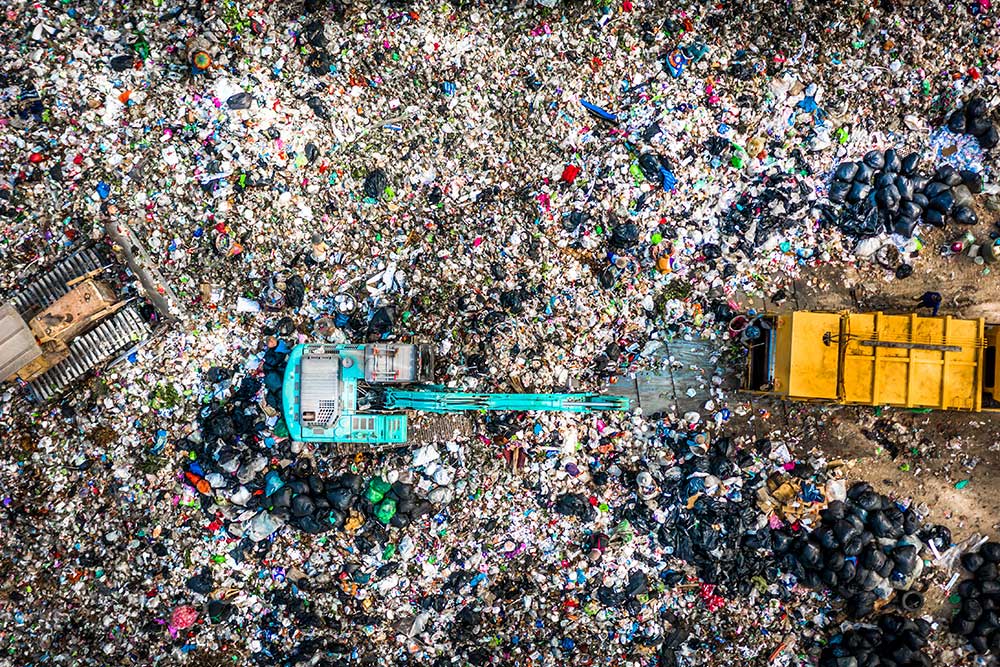
SDG 12 focuses on ensuring sustainable consumption and production patterns. However, the global material footprint is still growing, having risen to 96 billion metric tons in 2019.[51] To meet the objectives of SDG 12, the global economy needs to speed up the decoupling of economic growth from resource use by maximising the socioeconomic benefits of resources while minimising their negative impacts.
The industry’s contribution
Mobile technology and mobile operators contribute to SDG 12 by moving away from the linear approach and embracing circularity during product and service development.
For the mobile industry, one of its biggest environmental impacts comes from customers accessing connectivity through connected devices. Positioned between consumers, device suppliers and repairers/recyclers, mobile operators have a strong opportunity to contribute to a circular transition for devices, both from a direct control perspective as well as through influence and partnerships.
By moving to a circular business model for the industry, negative environmental and social impacts will be reduced. This means the industry can meet its demand for materials without depleting the global supply of finite resources. It will also create new market and employment opportunities and will support a just transition given supportive government policies and incentives.
SDG 12 mobile impact score
No Data Found
Source: GSMA Intelligence
Maximising mobile’s impact by 2030
A recent GSMA strategy paper on developing a circular approach for the mobile industry highlighted four immediate opportunities to improve circularity: understand product flows, increase consumer awareness, engage with suppliers and engage with repairers.[52]
"
The mobile industry can be a key driver in achieving the SDGs, if we make sure our business models are sustainable. At Deutsche Telekom, we test, for example, new ways to develop circular devices and technology together with our partners. Operating them in circularity oriented business models, e.g. in leasing and take-back schemes, help us to close the loop to full circularity.
Dominique Leroy, Board Member Europe, Deutsche Telekom